
Updated 2026-10-01 — Latest 2026 prices and availability
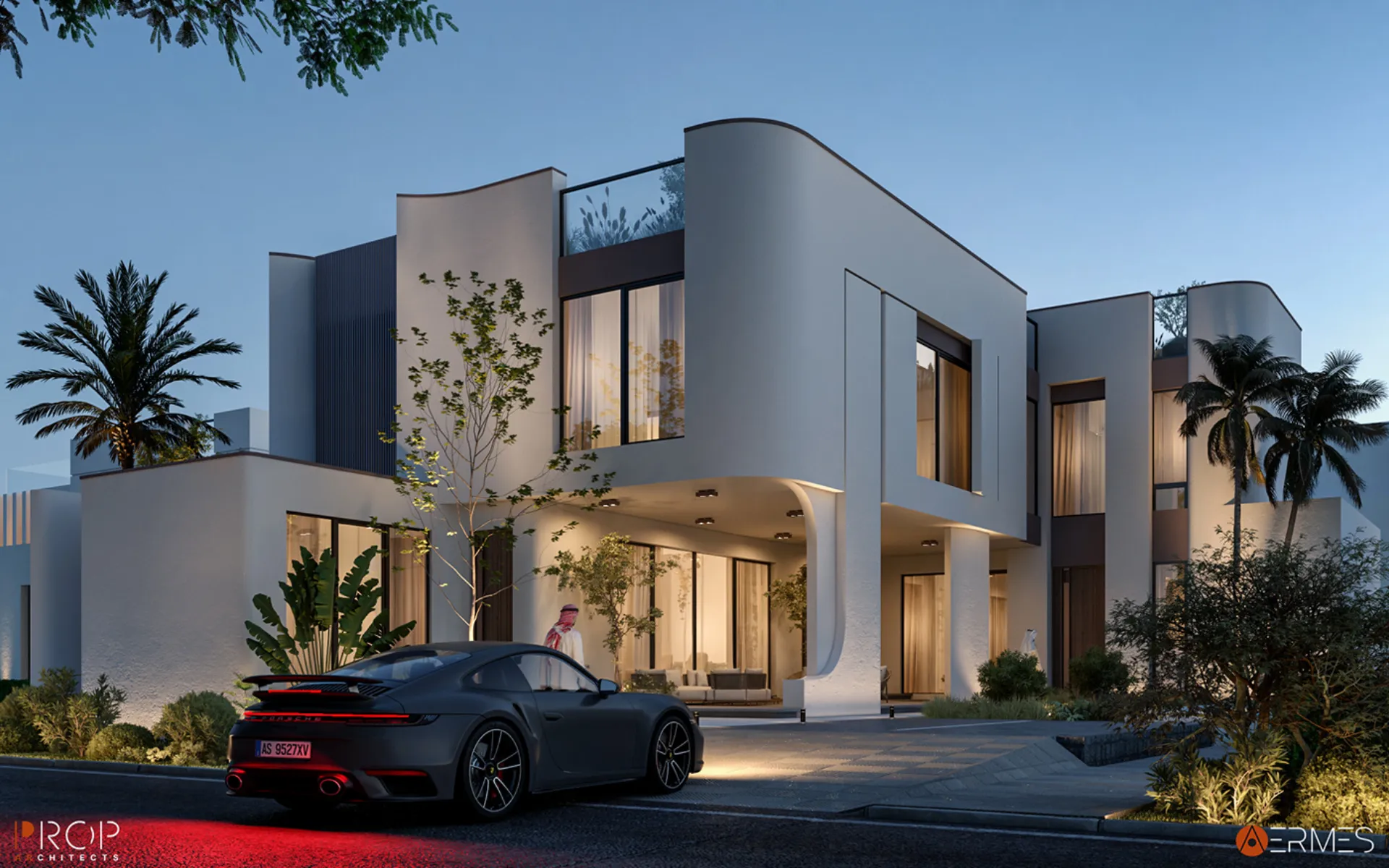
Home extension Abu Dhabi cost for a villa is AED 350,000-950,000 with 12-20 weeks on site after the permit is issued. First Unicorn Interiors handles structural design, developer NOC and municipality permits in-house, backed by 800+ projects and a 3-year warranty.
- Palm Jumeirah and Arabian Ranches extensions follow the same NOC-then-permit route we apply to Abu Dhabi villas
- Villa extension band: AED 350,000-950,000 indicative, confirmed only after an on-site survey
- 12-20 weeks on site; approvals run partly in parallel and are never summed into the build programme
- Dubai Municipality plan approval benchmark 10-15 working days; Abu Dhabi DMT cycle confirmed at survey
- Master developer NOC 10-20 working days in Dubai; Aldar communities in Abu Dhabi need the NOC before the permit
- Typical cost
- AED 350K – AED 950K
- Timeline
- 12-20 weeks
- Approvals
- Master developer NOC (Aldar, Emaar, DAMAC) · DMT / Abu Dhabi Municipality building permit · Abu Dhabi Civil Defence approval · ADDC connection approval · Dubai Municipality permit (Dubai villas) · Trakhees approval (Palm Jumeirah)
Home extension Abu Dhabi projects sit at the structural end of what we build: a villa extension with First Unicorn Interiors runs to AED 350,000-950,000 and takes 12-20 weeks on site once the permit is in hand. That band is indicative only and is confirmed after an on-site survey, because the final figure moves with finish level, materials sourcing, structural complexity and how quickly the developer approval cycle clears. Our in-house team has delivered 800+ projects across the UAE and every extension carries a 3-year warranty on structure, waterproofing and MEP. Approval risk for this scope is high, which is why we treat the NOC and municipal permit package as the first deliverable rather than an afterthought. Message us on WhatsApp at +971 58 565 8002 and we will book the survey, walk the plot and tell you honestly whether your villa can take the extension you have in mind.
In Abu Dhabi, a home extension usually means one of five things: a rear ground-floor extension that pushes the kitchen and family room into the garden, a side extension into an unused setback, a first-floor addition over an existing single-storey wing, a detached majlis or guest suite, or a covered roof terrace with a pergola that is later enclosed. Each is governed by the plot's permitted coverage, the setbacks fixed in the affection plan, and the maximum built-up area the Department of Municipalities and Transport (DMT) allows for that zone. Villas in Khalifa City, Mohammed Bin Zayed City and Al Shamkha tend to sit on generous plots with room to grow outward. Villas inside master-planned communities such as Yas Acres, Saadiyat Lagoons, Al Raha Gardens and Al Reef are tighter, and the developer's design guidelines decide what is possible before the municipality ever sees the drawings.
The approval chain in Abu Dhabi runs through the DMT and Abu Dhabi Municipality for the building permit, Abu Dhabi Civil Defence for fire and life safety, and Abu Dhabi Distribution Company (ADDC) for any change to the electrical or water connection. Where the villa sits inside a developer community, a no-objection certificate (NOC) from the master developer comes first and the municipal permit follows. We do not publish Abu Dhabi cycle times because they vary by zone and are confirmed at survey, but our Dubai benchmarks give a fair sense of scale: Dubai Municipality plan approval runs 10-15 working days, civil defence review 5-10 working days, DEWA connection or modification 7-14 working days, and a master developer NOC 10-20 working days. Several of those run partly in parallel, so we never add them together when we build your programme. The permit is what unlocks the 12-20 weeks on site.
Master developer NOC packs are where most home extension applications stall. Aldar communities in Abu Dhabi expect architectural elevations that match the community palette, a structural engineer's stamp, a drainage statement and proof that the extension stays inside the plot's allowable built-up area. In Dubai the pattern is the same with Emaar, Nakheel, Meraas and Sobha, and DAMAC formalises it further: the DAMAC community management NOC for Damac Hills, Akoya and Lagoons carries an admin fee of AED 1,050-5,000 and a refundable security deposit of AED 5,000-20,000, with a separate landscape NOC in Damac Hills 2 and a GFA fee for major extensions. Trakhees jurisdictions such as Palm Jumeirah run 15-25 working days. We prepare one consolidated submission pack, answer developer queries the same day and only mobilise once the NOC and the permit are both in hand.
Why the band is as wide as AED 350,000-950,000 comes down to three multipliers we apply to every villa extension estimate. Community tier is the first: a premium Saadiyat or Palm Jumeirah address carries stricter design controls, higher-spec façade matching and longer approval scrutiny, while a mid-tier community pulls the figure down. Finish level is the second and has the largest effect, ranging from an essential specification with porcelain floors and standard aluminium joinery, through premium, to luxury and ultra tiers with book-matched marble, bespoke joinery and integrated smart-home systems. Size is the third, tracked by bedroom count, since a six or seven-bedroom villa extension almost always means a bigger footprint, a longer roof span and a larger MEP upgrade than a three-bedroom home. We show every multiplier line by line in the survey report so the number is explained, not asserted.
Structure is where an Abu Dhabi home extension differs most from a cosmetic renovation. Coastal plots on Saadiyat, Al Reem and Al Raha sit on sabkha and reclaimed fill with a high water table, so we commission a soil investigation before design and typically specify a raft or piled foundation rather than tying strip footings into the existing villa. Inland plots in Khalifa City and Al Shamkha are firmer but still need the new slab isolated from the old with a proper movement joint so differential settlement does not crack the junction. Every structural drawing is stamped by a consultant registered with the DMT and checked against the developer's design guidelines. The existing roof slab is core-tested before we place any first-floor addition on it, and post-tensioned slabs are scanned before a single anchor is drilled.
MEP is the second hidden driver. An extension adds cooled volume, and in Abu Dhabi that means either extending the existing ducted system if the air handling unit has spare capacity or adding a dedicated DX unit with its own condenser location approved by the developer. ADDC must approve any increase in electrical load, and a larger extension often triggers a new distribution board and a load calculation signed by an electrical engineer. Drainage from a new kitchen or bathroom needs a gradient back to the existing manhole, which frequently dictates the floor level of the extension. Civil Defence looks at escape routes, smoke detection and, for enclosed majlis rooms, the fire rating of the wall between the new space and the garage. We design MEP to Estidama principles so insulation, glazing and cooling loads pass the sustainability review on the first submission.
Material choice in an Abu Dhabi extension is about heat, salt and matching. Exterior walls get a thermally broken cavity or insulated concrete block so the new room does not become the hottest space in the villa by August. Windows are thermally broken aluminium with low-emissivity double glazing, and on coastal plots we specify marine-grade powder coating and stainless fixings against salt corrosion. Roofs receive a torch-applied waterproofing membrane with a reflective screed, because the UAE sun destroys cheaper systems within a few summers. Façades are matched to the existing villa with GRC mouldings, paint and stone sampled on site so the extension reads as original. Inside, porcelain tile handles sand and heat better than most timber, and where clients want marble we specify honed finishes that hide etching from the hard water typical of the emirate.
Recent completed project: a four-bedroom villa in Khalifa City whose owners wanted a family kitchen and majlis opening onto the garden. The before/after transformation replaced a narrow galley kitchen and a cramped rear terrace with a single rear ground-floor extension: a raft foundation, a steel-framed opening through the original rear wall, a fully insulated flat roof and full-height sliding aluminium doors onto a new shaded terrace. The DMT permit, Civil Defence approval and ADDC load approval were secured before mobilisation, the existing ducted AC was extended after the air handling unit was confirmed to have capacity, and the façade was rendered and painted to match the original elevation. The family stayed in the villa throughout, with the site sealed from the living areas by a dust screen and a separate contractor entrance through the side gate.
Choosing a contractor for a home extension in Abu Dhabi comes down to five checks. Ask whether the structural engineer is registered with the DMT and whether the company has closed extension permits in your specific community, since developer guidelines differ between Aldar, Emaar and DAMAC projects. Ask who owns the NOC process and whether it is priced as a deliverable or left to you. Ask for the MEP plan, not just the finishes board, because cooling and drainage decide whether the room is usable in summer. Ask about the warranty and what it covers; ours is a 3-year warranty on structure, waterproofing and MEP. Finally, ask to speak to a client whose extension is now a year old, because that is when settlement cracks and roof leaks appear if the work was rushed. "They handled the Aldar NOC and the municipality permit without a single site visit from us, and the extension looks like it was always part of the house." — Khalid M.
On site, the 12-20 weeks break into clear phases. The first phase is enabling works: hoarding, service isolation, demolition of the rear wall or terrace, and excavation with the soil report in hand. The foundation, columns and roof slab follow, with curing time built in because Abu Dhabi heat accelerates surface drying and we cure slabs under wet hessian to stop cracking. Blockwork, waterproofing and window installation then close the envelope, after which MEP first fix, plastering, tiling and joinery run in sequence. Snagging, the Civil Defence inspection and the municipal completion certificate close the project. We publish the programme at contract signing and report progress weekly on WhatsApp with photographs. Nothing in the AED 350,000-950,000 band is a quoted price until the survey is done, so the honest next step is to send us your villa address and plot plan on +971 58 565 8002.
Definitions
- NOC (No-Objection Certificate)
- Written consent from the master developer or community management confirming an extension complies with community design guidelines. Required before the municipality will accept a building permit application.
- Affection plan
- The official plot document issued by the municipality or land authority showing plot boundaries, setbacks, permitted use and coverage. It fixes how far an extension can push toward each boundary.
- Built-up area (BUA)
- The total enclosed floor area of a villa across all floors. Extensions are capped by the maximum BUA allowed for the plot, and large structural additions can trigger extra sustainability requirements.
- Estidama Pearl Rating
- Abu Dhabi's sustainability framework administered through the DMT. Villa works are assessed on insulation, glazing, water and cooling efficiency before a permit is granted.
- DMT (Department of Municipalities and Transport)
- The Abu Dhabi government body that oversees Abu Dhabi Municipality, building permits, affection plans and the Estidama programme for the emirate.
- Setback
- The minimum clear distance a structure must keep from the plot boundary. Side and rear setbacks usually decide whether a ground-floor extension is feasible at all.
How we run a home extension project in Abu Dhabi
- Site survey and feasibility. We walk the plot, measure setbacks against the affection plan and check the existing structure. You get a written feasibility note stating whether the extension is permissible and which approvals apply.
- Concept and structural design. Our in-house designers produce plans and elevations matched to the villa, and a DMT-registered structural engineer designs the foundation and roof. A soil investigation is commissioned on coastal or reclaimed plots.
- Developer NOC. We compile the NOC pack for Aldar, Emaar, DAMAC or the relevant community management and handle every query. No work starts until the NOC is issued.
- Municipal permit and Civil Defence. The stamped drawings go to the DMT and Abu Dhabi Municipality for the building permit, with Civil Defence and ADDC submissions running in parallel where the authority allows.
- Enabling works and structure. Hoarding, service isolation, demolition and excavation come first, followed by foundation, columns and roof slab with controlled curing for the Abu Dhabi climate.
- Envelope and MEP. Blockwork, waterproofing, insulation and glazing close the shell. MEP first fix extends cooling, power and drainage under the approved load calculation.
- Finishes and façade matching. Tiling, joinery, painting and GRC detailing are sampled against the existing villa so the extension reads as original inside and out.
- Inspection, handover and warranty. Civil Defence inspection and the municipal completion certificate close the permit. We hand over with as-built drawings and a 3-year warranty on structure, waterproofing and MEP.
Tier comparison
| Tier | Scope / spec | Typical AED |
|---|---|---|
| Budget | Essential finish: porcelain floors, standard aluminium windows, extended ducted AC, painted render façade, single-storey rear extension | From AED 350,000 |
| Mid-range | Premium finish: large-format porcelain, thermally broken low-e glazing, matched GRC façade, upgraded distribution board, side or rear extension | Within AED 350,000-950,000 |
| Premium | Luxury finish: honed marble, bespoke joinery, dedicated DX cooling, smart lighting, first-floor addition over an existing wing | Upper end of AED 350,000-950,000 |
| Ultra-luxury | Ultra finish: book-matched stone, structural glazing, full MEP upgrade, detached majlis or guest suite with landscaped terrace | AED 950,000+ |
See exactly where every dirham goes — no hidden costs, no scope creep.
Get my free quote on WhatsApp →
Frequently asked questions
How much does a home extension cost in Abu Dhabi?
How long does a home extension take in Abu Dhabi?
Do I need a developer NOC before the municipality permit?
Which authorities approve a villa extension in Abu Dhabi?
Can I stay in the villa during the extension?
What warranty comes with the extension?
- Fixed-price contract — fully itemized, no hidden costs or mid-project surprises.
- 3-year workmanship warranty on every project.
- In-house team — designers, engineers and trades under one roof, no subcontractor markups.
- Approvals handled — we manage Dubai Municipality, DEWA and developer NOCs for you.
- 800+ projects delivered across Dubai.
Free quote — same-day reply
WhatsApp the team on +971 58 565 8002. 800+ projects delivered. Fixed price, 3-year warranty, approvals handled.